
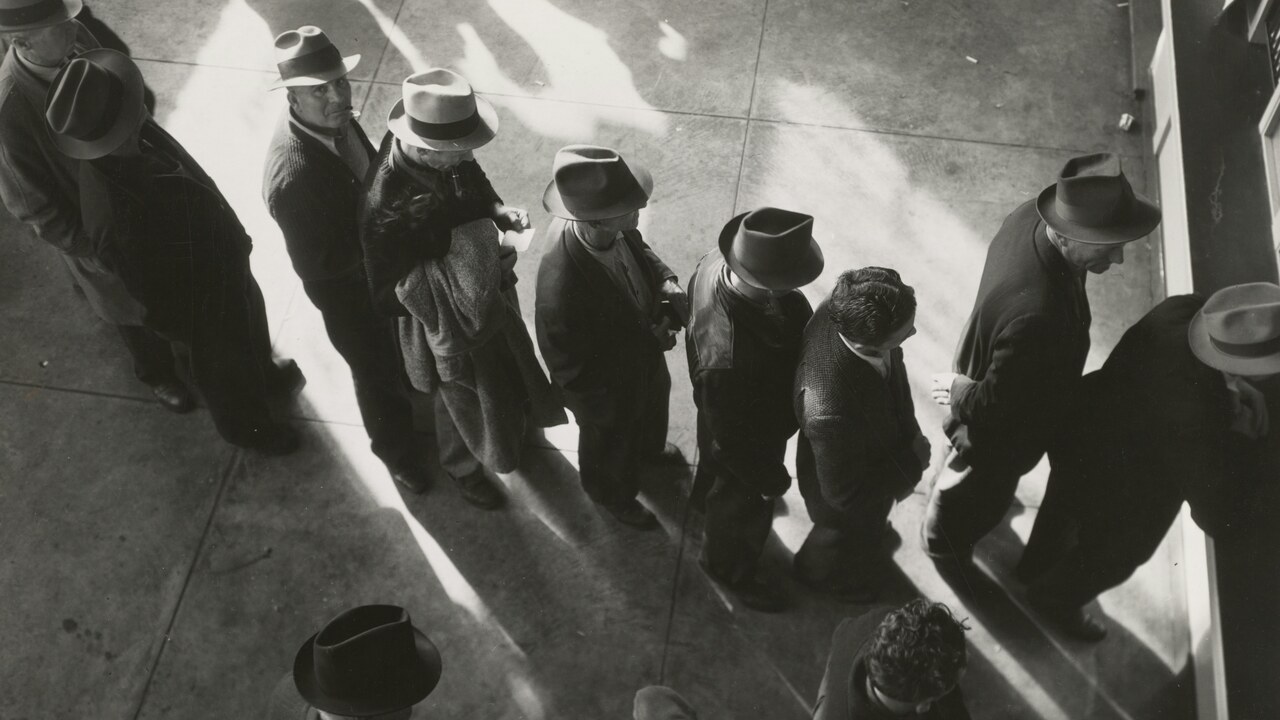
In 2026, approximately thirteen employers filed WARN notices with the Connecticut Department of Labor, eight of which indicated layoffs affecting more than 50 workers.
This year, the largest impact resulted from the closure by Macy’s of a Cheshire fulfillment center and South Windsor distribution center, affecting nearly 1,000 employees altogether. Aetna filed a WARN notice covering 313 employees at its Hartford headquarters, which it claims are targeted primarily at employees in remote positions. And while employees at Stanley Black & Decker’s corporate headquarters in New Britain were spared in the WARN notice it filed two months earlier in March, of the approximately 300 employees reportedly impacted by the announced closure of its manufacturing plant just down the road, all but a few will be given a chance to stay with the company and transfer to another location.
What the WARN Act Requires
The WARN Act, 29 U.S.C. § 2102(a), does not require employers to disclose the precise basis for layoffs or the factors considered in making those decisions. Instead, covered employers generally must provide at least 60 days’ advance notice before the layoffs begin.
Cascading Disclosures Under Public Act 26-15
While we can infer that the largest in-state losses appeared to affect manufacturing and customer service roles, the WARN Act does not require that filers disclose the business reasons for the layoff or other factors considered. However, that will almost certainly change with Connecticut’s new Public Act 26-15, effective October 1, 2026, which Governor Lamont signed in May, stating that the Act “establishes safeguards and transparency requirements regarding the growing use of artificial intelligence.”
Beginning October 1, 2026, employers filing WARN notices in Connecticut must also disclose “whether the layoffs that are the subject of such written notice are related to the employer’s use of artificial intelligence or another technological change.” A deployer who deploys an automated employment-related decision technology to generate any output for the purpose of making, or as a substantial factor in making, an employment-related decision must provide individualized notice and disclosures to each affected employee concerning “[the] automated employment-related decision technology to generate any output for the purpose of making, or as a substantial factor in making, an employment-related decision concerning the person; the purpose of such automated employment-related decision technology in making such employment-related decision; the trade name of such automated employment-related decision technology; the categories and sources of personal data processed by such automated employment-related decision technology; [and] how such personal data will be processed or assessed by such automated employment-related decision technology,” beginning October 1, 2027.
These requirements could transform a previously routine WARN filing into the first step in a broader disclosure process. The Connecticut Department of Labor would first receive notice that a layoff was related to artificial intelligence or another technological change. Individual employees could then receive information identifying the technology used, its purpose, the categories and sources of personal data processed, and the manner in which those data were assessed.
Algorithmic Discrimination
In addition, the Act amends CFEPA to provide that “use of an automated employment-related decision technology, as defined in section 7 of this act, shall not be a defense against a complaint alleging a discriminatory practice” and empowers the CHRO to “consider evidence of anti-bias testing or similar proactive efforts to avoid such discriminatory practice, including, but not limited to, the quality, efficacy, recency and scope of such testing or efforts, the results of such testing or efforts[.]” This is a direct reference to, if not a formal codification of, a term known as “algorithmic discrimination,” which describes a theory that AI-automated decisions may lead to discrimination against protected classes in employment decisions. The phrase appeared in Solon Barocas and Andrew D. Selbst’s 2016 paper, Big Data’s Disparate Impact, and was subsequently used in the 2022 Blueprint for an AI Bill of Rights to denote instances in which automated data processing produces different selection rates or adverse outcomes among protected demographic groups.
The notion that discriminatory motives may be inferred through statistical, broad-based analysis is rooted in the disparate-impact doctrine. In Griggs v. Duke Power Co., 401 U.S. 424, 431 (1971), the Supreme Court held that “[the Civil Rights] Act proscribes not only overt discrimination, but also practices that are fair in form, but discriminatory in operation. The touchstone is business necessity. If an employment practice which operates to exclude Negroes cannot be shown to be related to job performance, the practice is prohibited.” Congress codified the doctrine in the Civil Rights Act itself at 42 U.S.C. § 2000e-2(k).
Disparate-impact theory remains “good law,” but, as with any nonobjective standard, those subjected to it may find themselves in a catch-22 when attempting to predict or preempt liability. The City of New Haven famously found itself liable in Ricci v. DeStefano, 557 U.S. 557 (2009), after attempting to evade a potential disparate-impact suit by invalidating the results of civil-service examinations used as a prerequisite for promotion, where reliance on the results would have excluded Black firefighters from obtaining management positions at a higher rate than non-Black firefighters. The non-Black firefighters brought suit under the Civil Rights Act and won; the Supreme Court reasoned that the City was liable under the Civil Rights Act because it could not identify a “strong basis in evidence” dispute regarding whether the civil-service examination results bore on the requirements of the job. In other words, by acting preemptively and discarding the results solely to avoid inviting liability for discrimination against one protected racial category of potential plaintiffs, the City violated the rights of another.
The final text of the bill omitted any reference to “algorithmic discrimination,” opting instead to adopt the more neutral term “automated employment-related decision technology” as a baseline practice from which discrimination may be inferred but is not presumed. However, while the terms “algorithmic discrimination” and “disparate impact” are absent, their conceptual imprint on the final statute is clearly present in section 13, which clears the way for either theory to support a cause of action by specifically preempting the use of automation as a defense. As the history of the disparate-impact doctrine makes clear, this places employers in a perilous bind: if an AI-generated numerical analysis produces results that might be argued to disproportionately impact employees belonging to a specific protected category, the company could face liability on the mere inference of discrimination. Conversely, discarding those same results simply to avoid such an inference could also render an employer vulnerable to allegations of discriminatory preference. The CHRO will play a crucial role in determining which claims are viable under CFEPA and the Civil Rights Act and which do not state a cause of action.
Employers, for their part, can minimize potential liability by choosing the data provided when delegating employment decisions to AI and should presume that all inputs and outputs from any AI system are not only discoverable, but may be subject to immediate disclosure alongside a WARN Act filing. Crucially, any consultation or discussion regarding liability should occur confidentially between the company and its lawyers before filing a WARN notice in anticipation of these new production obligations. PA 26-15 gives employees the right to request disclosure of AI materials that would otherwise only be disclosed under discovery, and courts have consistently held that “chats” with an AI model enjoy no special privilege. The breadth of individualized, automatic disclosures under PA 26-15 is unprecedented, with the closest analog being the right to demand a personnel file under Conn. Gen. Stat. 31-128b (and it is not automatic). It is this provision of the new AI law that may have the most consequential impact in combination with the WARN Act’s notice provisions by empowering employees with a pre-suit statutory right to request documents that can serve as the evidentiary basis for a discrimination complaint almost simultaneously with receiving a layoff letter or termination notice.
From WARN Notice to PA 26-15 Disclosures to Potential CFEPA Liability
Read in concert with the Act’s new anti-discrimination provisions, PA 26-15 will transform previously routine WARN Act filings into a comprehensive series of disclosures that invite substantial potential liability under CFEPA. With each WARN layoff, the CHRO, already backlogged and underfunded, will face a surge of complaints alleging discrimination arising from the use of artificial intelligence. The combined notice requirements will allow affected employees ample time to retain counsel and potentially salvage their jobs before the terminations even begin by initiating state investigations.
As such, Connecticut employers, as well as state agencies, must anticipate and prepare for the sweeping impact these combined disclosures will have on their respective operations before the remaining provisions of PA 26-15 take effect next year.
It is notable that the three employers responsible for the largest number of layoffs reported in WARN notices this year in Connecticut, Macy’s, CVS Health/Aetna, and Stanley Black & Decker, have each publicly disclosed using artificial intelligence in management, personnel, and other business operations. According to Stanford, 88% of organizations now use AI in at least one business function. The sweeping scope of the legislation will likely exceed the expectations not only of employers, but also of the state itself. Beginning October 1, 2026, employers in Connecticut must standardize disclosures regarding their use of AI in WARN Act filings. A yes on § 26 does not establish the deployer-notice duty in §§ 8-10.
Any suggestion to the contrary misunderstands the reality of enterprise AI, as defined by major industry players like IBM, Oracle, and AWS. To make it even simpler: Pepsi is soda. References to industry sources establish what enterprise AI is in fact.
Moreover, the CFEPA amendments will now provide grounds for complaints to the CHRO involving employers filing WARN Act notices and AI disclosures, and the already substantial risk of liability exposure will be compounded by the combination of public and individualized disclosures mandated under the new Act starting next year. Employers can no longer afford to provide boilerplate explanations generated during layoffs and must carefully review any input rendered by artificial intelligence and subject all final decisions to layers of manual review. Moreover, in-house counsel must advise decision-makers that material generated by or provided to enterprise artificial intelligence systems may be discoverable in the event of a complaint by even a single employee.
The CHRO’s New Role: What Employers Must Do, and What Employees Should Do Before Layoffs
The CHRO may not currently possess the resources necessary to process the influx of complaints that will be facilitated by the new law, and the state should consider whether additional funding is warranted for its investigative and enforcement efforts before the law takes full effect. If the CHRO is up to the task by the time the disclosures take effect, then, as the state’s primary agency for investigating and prosecuting employment disputes, it will be prescribed a far more proactive role in investigating discrimination and CFEPA violations that may occur as a result of layoffs than it did before PA 26-15. For employees facing job losses, these changes will tip the scales and permit them to convert layoff impact letters into potential causes of action under CFEPA, which any affected employee would be wise to leverage.